
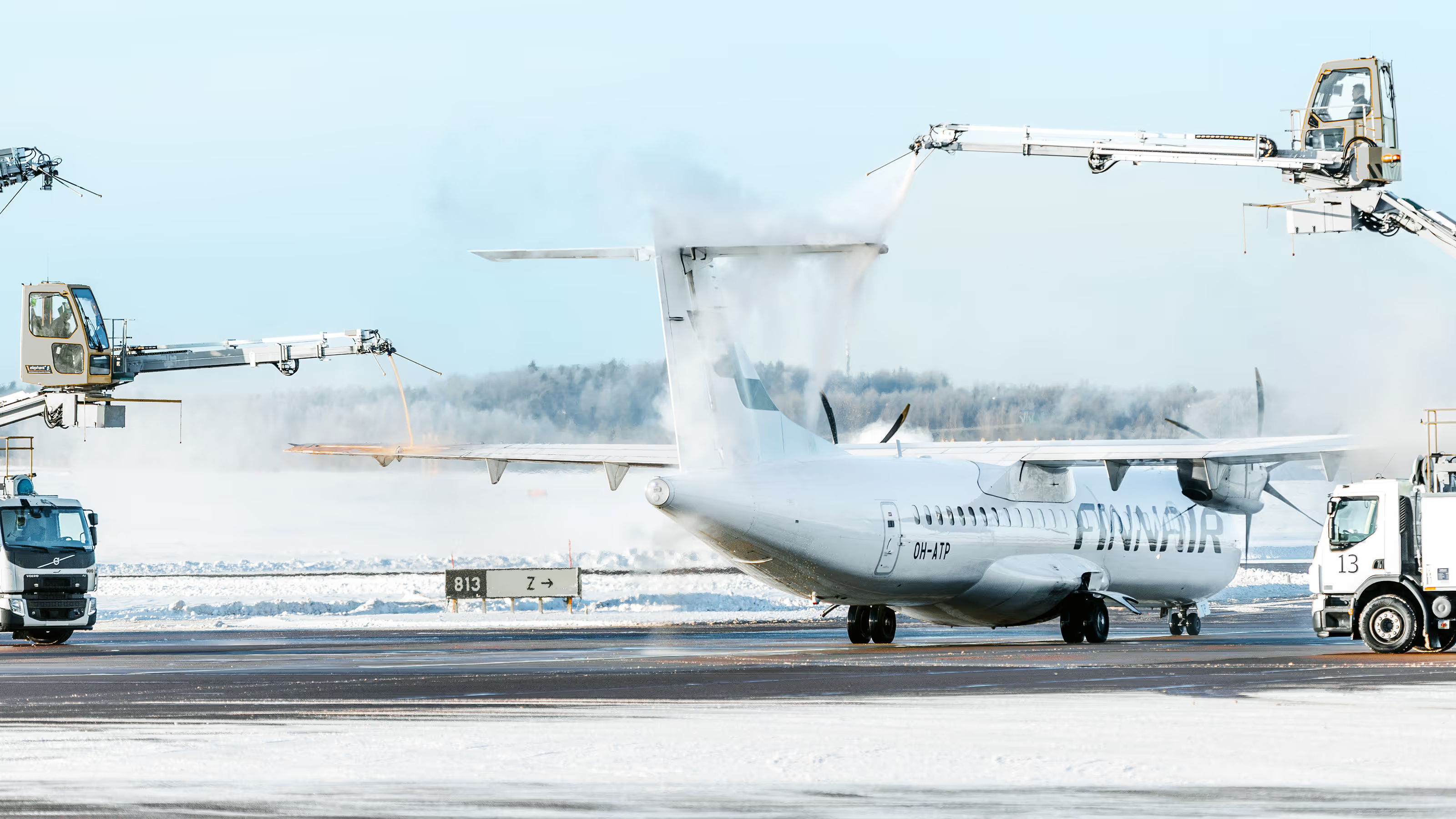
Around 3,000 treatments every winter – the busiest season for our de-icing professionals is here
Proper de-icing is is essential not only for flight safety but also for environmental reasons.
De-icing is an important and essential part of safe winter operations. At Helsinki Airport, our own team of around 60 professionals at Ground Operations ensures that winter operations run smoothly throughout the de-icing season, which lasts from early September to the end of May.
Over the course of the season, our team carries out approximately 3,000 de-icing treatments. The need for de-icing is assessed around 1,000 times during the season using a dedicated inspection vehicle.
In addition to our own aircraft, we also provide de-icing services for other airlines: around a dozen carriers rely on our expertise and professional know-how.
Dedicated equipment is required for de-icing
De-icing is carried out using purpose-built trucks equipped with a movable boom and a raised basket. We operate six de-icing vehicles, and we also have one vehicle used specifically for de-icing inspections.
The de-icing vehicles are positioned in a group of four vehicles. The aircraft taxies between the vehicles, and the driver in the basket drives the de-icing vehicle alongside the aircraft. The boom and basket give the operator a clear view of the surfaces about to be treated. Thanks to the nozzles mounted on the boom, the de-icing fluid can be applied precisely, ensuring that only the required amount is used.
After spraying (or "washing"), a final inspection is carried out to confirm that the aircraft surfaces are clean. The aircraft is then ready for departure. At Helsinki Airport, once de-icing is complete, the aircraft can taxi directly to the runway for departure.
Procedures are selected based on current weather conditions
The need for de-icing and the way it needs to be carried out depend on the prevailing weather conditions. Ice forms particularly when humidity is high, snow or freezing rain is falling, and temperatures are below zero or close to it. In dry sub-zero conditions, de-icing is not always required. Wing temperature and the temperature of the fuel inside the wing also affect the formation of ice and frost.
Hot water mixed with substances including propylene glycol is used for de-icing. The fluid is dyed a bright orange. It melts and removes snow and ice from the aircraft's surfaces. A green-coloured anti-icing fluid is also used to help prevent re-freezing.
A light frost treatment may take only a few minutes. In some cases, a more demanding de-icing treatment – especially on a larger aircraft – can take up to around twenty minutes. The temperature limit for de-icing fluid is –34°C; in colder conditions, de-icing cannot be carried out.
De-icing is precise and meticulous work
De-icing is precise and meticulous work. It is essential that it is carried out correctly, not only to ensure flight safety but also to minimise environmental impact. During de-icing, emissions are produced by both aircraft engines and de-icing equipment. The objective is to use the smallest possible amount of chemicals.
The chemicals used for treatments have been specifically developed to be less harmful to the environment. At Helsinki Airport, de-icing takes place in a designated area where any run-off liquid is collected via drains and a vacuum truck, preventing chemicals from entering the surrounding environment. The fluids used today can also be cleaned and recycled.
When the season comes to an end, our professionals turn their attention to maintaining the equipment and keeping their skills up to date. Procedures are refined through practice runs, using water to rehearse de-icing operations.